


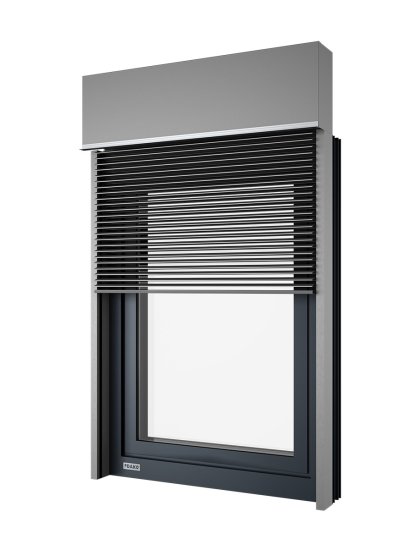


Both systems differ in their construction, capabilities, and installation, although their purpose is very similar.
To make the right decision, we must first define our priorities and the stage of the investment. It is worth remembering that such systems are best planned already at the house design stage, which allows for the application of an appropriate solution tailored to the building and user expectations –says Paweł Gieracki, Head of Sales and Product Development Department at the Gates, Roller Shutters, Blinds Group.
The fundamental difference lies in the method of light control.
- Roller shutters operate in an all-or-nothing manner, creating a tight, monolithic barrier when lowered, whereas blinds have rotating slats that allow for adjusting the amount of light entering the interior.
Roller Shutters vs. External Blinds: DAKO Coverings in Real Projects
However, instead of analyzing dry theory, let's see how both systems performed in practice. See how the right choice of coverings solved investors' problems in two different homes!
Roller shutters: project from Poland – muted walnut
The core of the project was PVC joinery in a beautiful walnut-colored veneer. To fully secure the large window surfaces, the investors chose external roller shutters that were color-consistent with them.
In this project, the priority was the need to create a solid thermal insulation barrier and a sense of privacy after dark. Closed roller shutters created a visually striking composition on the facade, and the natural walnut color blended into the entire architectural concept, creating a fitting accent on the facade.

External blinds: project from the Netherlands – modern frame house
The building's architecture was based on strong geometric contrasts – a light facade without unnecessary elements and dark joinery. The project features spectacular, panoramic glazing in the living area, which was complemented by automated facade blinds in a corresponding color.
Such coverings proved to be an excellent solution: the horizontal slats brilliantly broke up the large glass surface, while allowing for arbitrary light dosage into the interior without creating annoying reflections on screens.

Not sure what's next? Make a decision with an expert!
Finally, it is worth noting that although the choice of models and variants is considerable, there is never one universal solution for all properties.
- The needs of each of us, building requirements, or the intended use of specific rooms can vary greatly, and our visual preferences and the style of the window joinery also come into play.


